🌳 Branching Model & 📌 Semantic Versioning in Git Workflows
Managing branches and releases efficiently is crucial for maintaining code quality, traceability, and smooth deployments. In this article, we’ll explain how to structure your Git workflow using branches for different purposes and how to apply Semantic Versioning (SemVer) to tag releases.
🌳 Branching Strategy
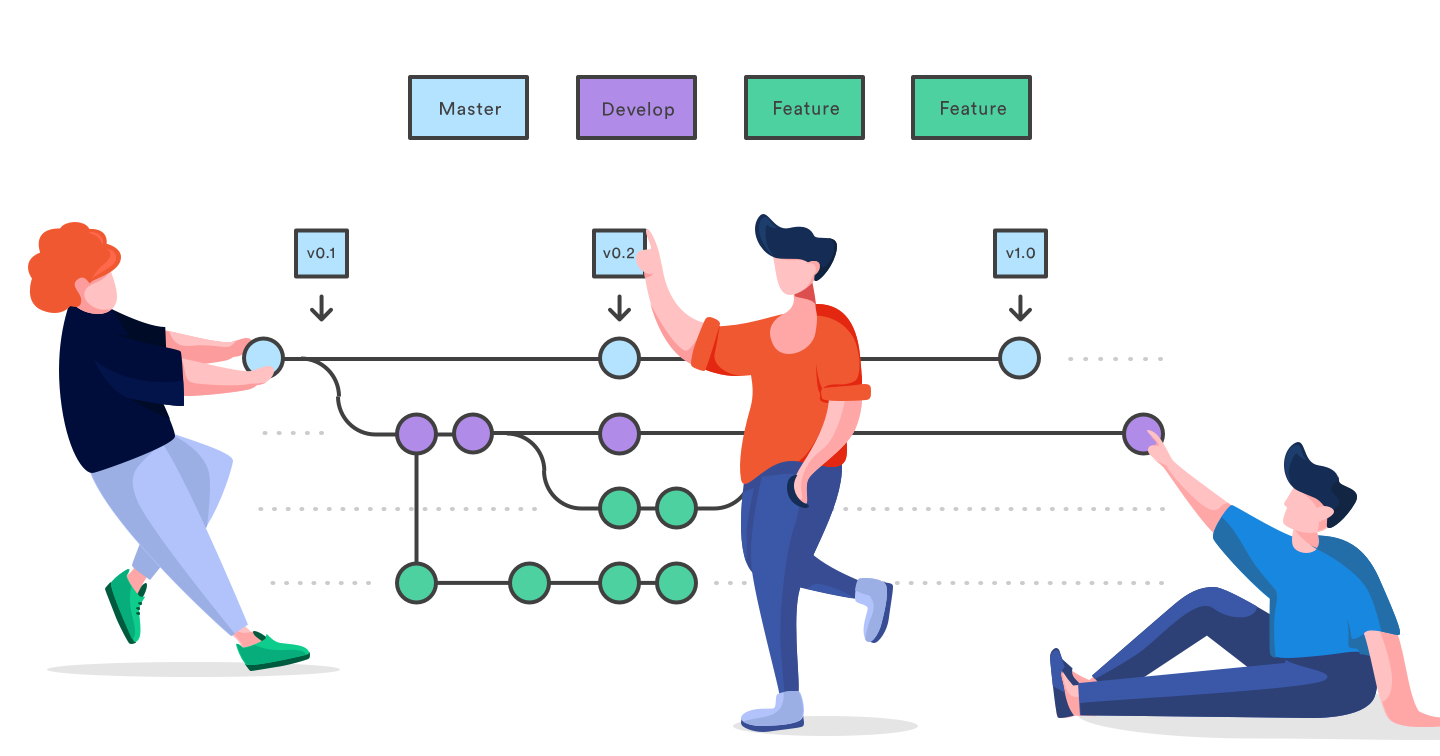
We adopt a simplified Git Flow–inspired model:
mainbranch → Always reflects the latest stable production-ready code.devbranch → Integration branch for ongoing development.feature/*branches → Temporary branches for new features, merged back intodev.hotfix/*branches → For urgent fixes, branched directly frommain, then merged back into bothmainanddev.
Example Workflow
gitGraph
   commit id: "Init"
   branch dev
   checkout dev
   commit id: "Feature A start"
   branch feature/A
   commit id: "WIP A1"
   commit id: "WIP A2"
   checkout dev
   merge feature/A id: "Merge A"
   commit id: "Stabilization"
   checkout main
   merge dev id: "Release v1.0.0"
   branch hotfix/urgent
   commit id: "Hotfix"
   checkout main
   merge hotfix/urgent id: "Release v1.0.1"
   checkout dev
   merge hotfix/urgent

## 📌 Semantic Versioning (SemVer)

We use Semantic Versioning 2.0.0 format:

```bash
MAJOR.MINOR.PATCH
- MAJOR → Breaking changes (e.g., API change, backward-incompatible refactor).
- MINOR → New features, backward-compatible.
- PATCH → Bug fixes, backward-compatible.
Examples
- 1.0.0 → Initial stable release.
- 1.1.0 → Adds new features without breaking existing functionality.
- 1.1.1 → Fixes a bug without changing functionality.
🏷 Tagging Releases in Git
Each release is tagged with its SemVer version:
# Tagging a release
git tag -a v1.0.0 -m "Release v1.0.0 - Initial stable release"
git push origin v1.0.0
This allows:
- CI/CD pipelines to build artifacts based on tags.
- Traceability of deployments.
- Easy rollback to previous versions.
🔗 Integration with CI/CD
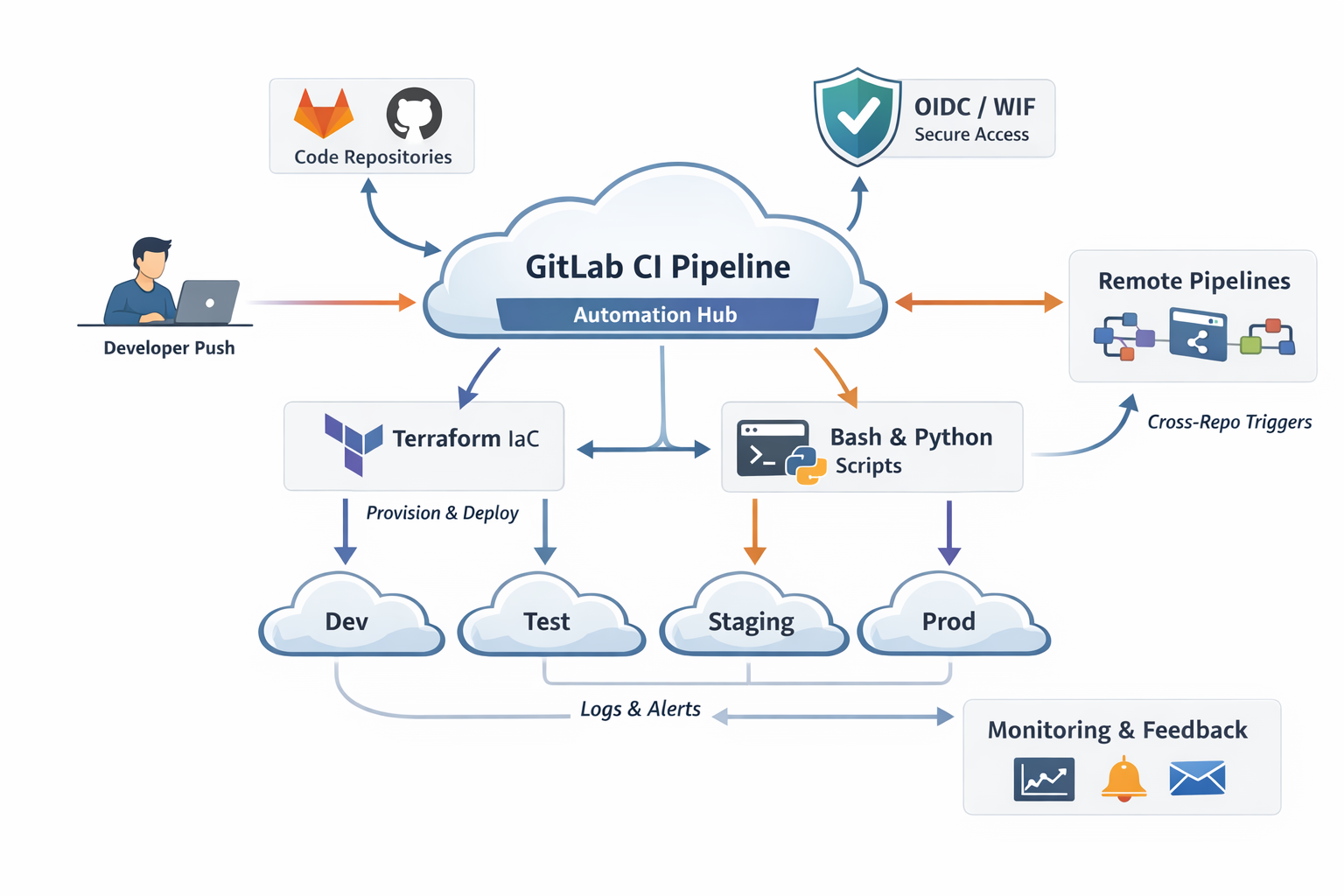
- Development branch (dev) → triggers tests & static analysis (e.g., SonarQube).
- Main branch (main) → triggers build + deployment pipeline.
- Tags (vX.Y.Z) → trigger release pipelines (e.g., publishing Docker images, Helm charts).
✅ Conclusion
By combining a clear branching strategy with Semantic Versioning, we ensure:
- Predictable release cycles.
- Traceability of features and fixes.
- Alignment between Git workflow and CI/CD pipelines.
This model scales from small projects to enterprise environments and integrates seamlessly with tools like SonarQube, GitHub Actions, and ArgoCD.